
How to Measure a Boat Steering Cable
Most of us that own boats, generally pay little attention to the boat’s steering system, if it does the job without excess friction or play, then it’s okay, but as our boats age, the steering system wear and may need replacing.
When replacing a new steering system for old, it’s good practice to replace a steering system with one of the same types as was originally installed in your boat. Although in some instances, it is much more cost effective to replace with a new steering kit.
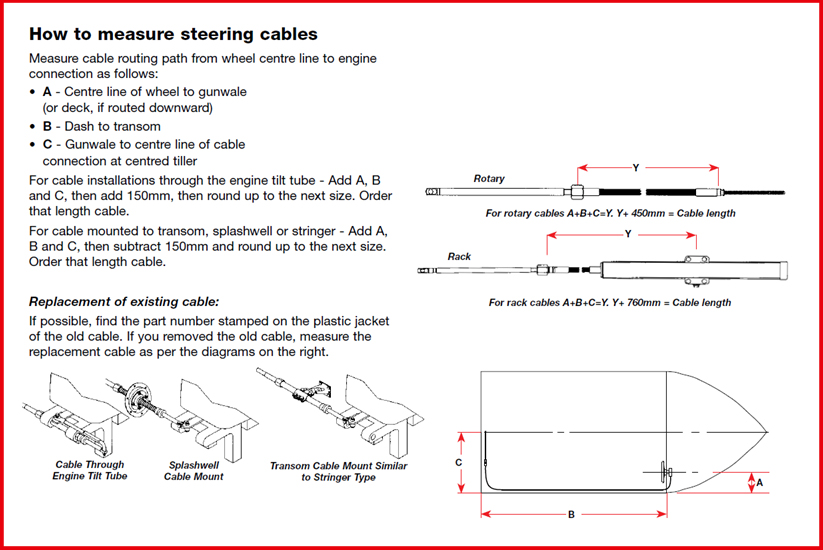
First thing is to try and identify the type of cable from markings edged into the plastic coating, this not only gives you some idea of the type of cable but also the size of the cable. Certain cables are measured in feet, others in metres. The through the engine tilt tube system is the most common. Common problems with steering include becoming stiff suddenly, locking up completely, turns in one direction easily, but does not turn in another. Total loss of steering is possible if you don’t inspect and maintain your steering system regularly.
Whichever steering system you use, ensure your boat’s motor is mounted correctly. The position of the motor can impact on steering load and boat handling. Be sure to water-test your new system carefully before heading out to sea, this way you can be sure you will have no troubles and return safely.
How to measure a cable for your boat? See above a quick way of how to measure your steering cable. If you are not sure and can not find any markings on the outside of the cable, it is best to remove the cable and out staff can help you with the right one or a new steering kit.
As you’ve probably gathered by now, there are two types of steering – Hydraulic or Mechanical.
Installing a new steering system to your vessel
Consider, do you prefer Cable Steering or Hydraulic Steering?
Hydraulic Steering cost more in the beginning but you will appreciate it, once you have it, especially when manoeuvring tight corners or travelling long distances. Hydraulic Steering is becoming a product range which caters to all types of vessels from 5 metres to over 100 metres. The range of hydraulic boat steering has increased dramatically over the past 20 years with considerable emphasis being placed on the growing need for more efficient and powerful steering equipment to handle larger vessels, and larger horsepower on smaller vessels.
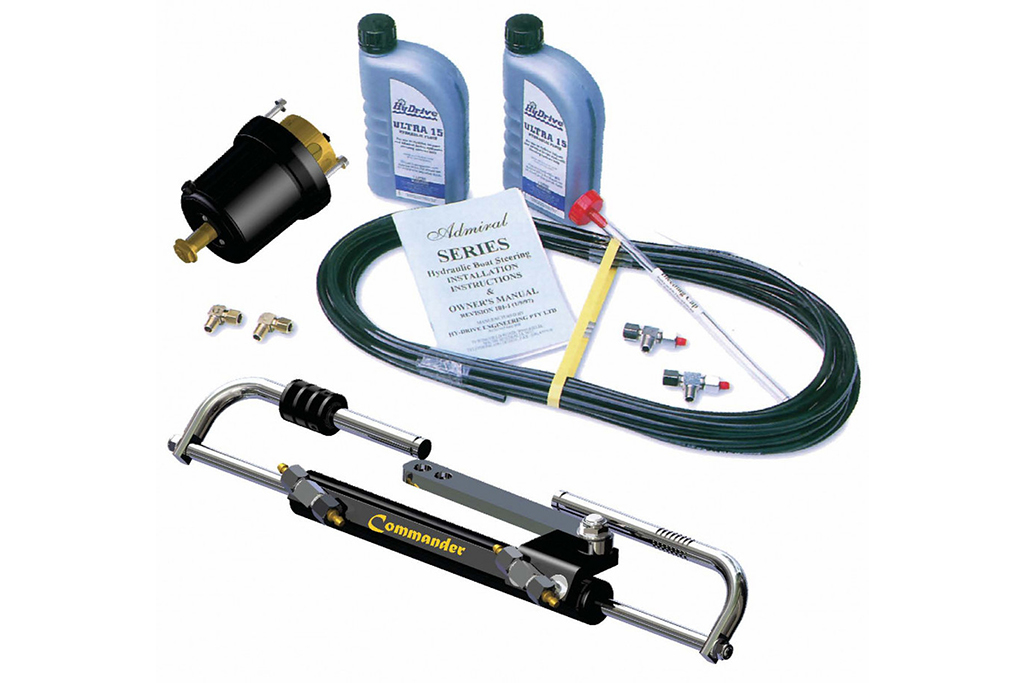
Hydraulic boat steering allows for easier and safer handling of high-torque engines. Maintaining a steady course, thanks to the elimination of feedback, is much simpler because zero steering effort is necessary. Many manufacturers, including Hydraulic Steering Packages in their mid to larger boat range. If you are wanting to add to your own vessel, the Hydraulic Steering kit comes complete and has easy-to-install instructions. You can fit to any commercial or pleasure boat with ease. For single and dual outboard motors up to 150HP, the bullhorn system is an ideal choice for leisure boats – offering the advantage of full hydraulic control of your boat at an economical price. Installation is simple, performance is great, and handling is direct with only 3 turns HO/HO. The cylinder comes in kit form with all necessary fittings including high pressure nylon hydraulic tubing, 2 litres of hydraulic fluid, steering helm unit and detailed instructions.
Auto Pilot Systems are another item becoming very popular on the larger vessels 5m above and run in conjunction with hydraulic steering. Wanting to improve performance to faster response or lower steering effort, hydraulic steering can be the way to go for you.